Modernizing Logistics for the Front Lines
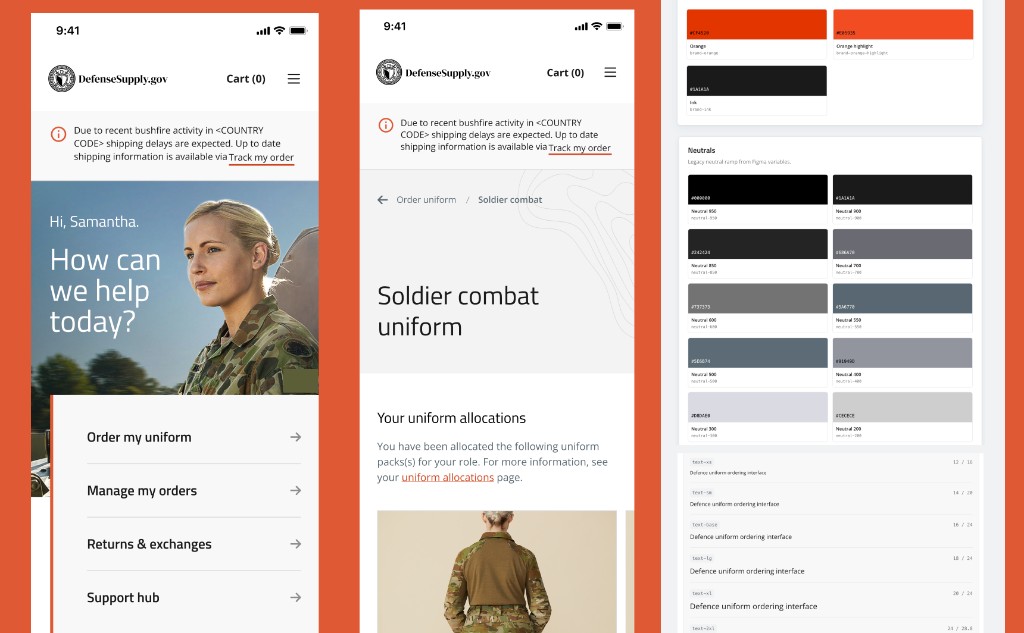
Codename: DefenseSupply.gov is a unified digital procurement platform designed for Defense Force personnel to manage, track, and order official uniforms and gear. In a high-pressure one-month engagement, I established the foundational design system and mapped the core mobile UI flows.
The result was a production-ready component library and high-fidelity flow blueprints that gave engineering a clear implementation path.
My Role
- UI Design
- Design Systems
Timeline
- 4 Weeks
Outcome
- Production-ready component library
- High-fidelity core mobile flows
TLDR
System-first approach
Built the foundational design system first, then assembled the final UI flows in with consistency.
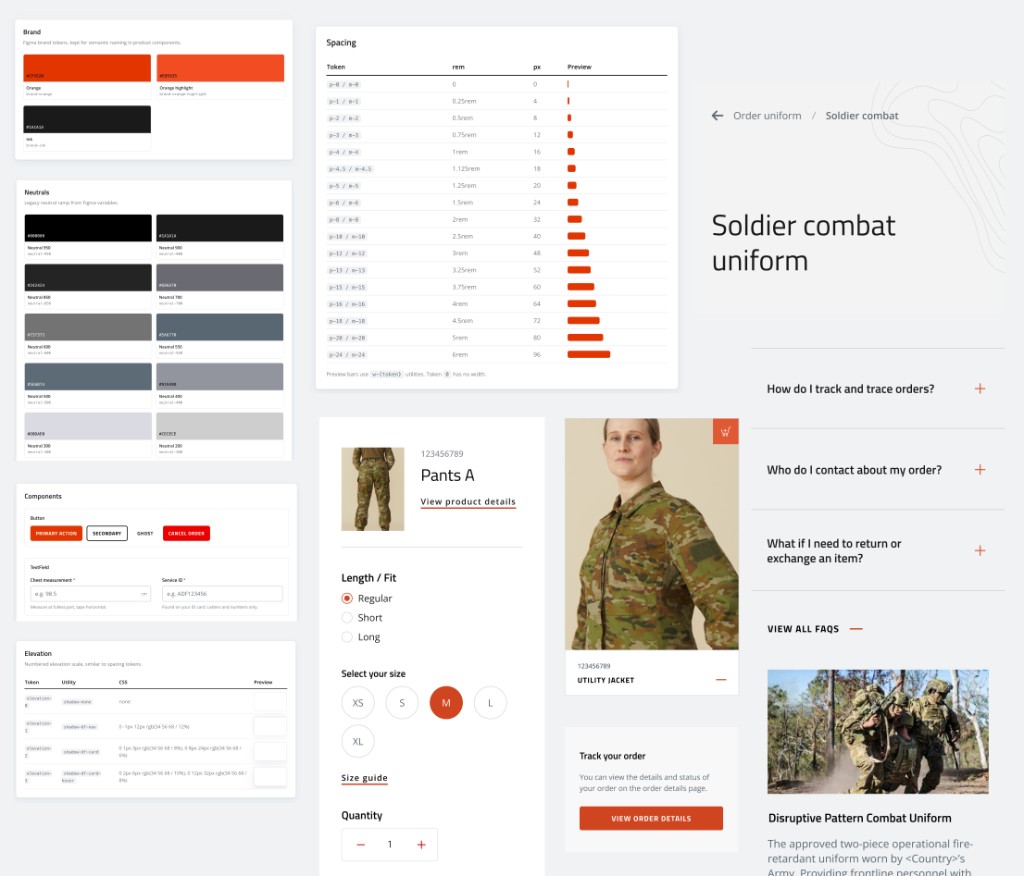
Scalability through Design Tokens
Instead of static screen handoff, I delivered a tokenized UI kit, structured as a shared source of truth for design and engineering.
Mobile-first design
Designed for mobile-first for outdoor environments, while keeping the desktop experience in mind as well.
Executive Summary
DefenseSupply.gov focused on modernizing official gear procurement for Defense Force personnel through a unified digital platform. The challenge was to translate strict logistical requirements into a fast, clear, and trustworthy shopping experience while moving from discovery to handoff in one month.
Challenges
- Tight timeframe: Building a robust Figma component library while mapping end-to-end core flows in 30 days demanded ruthless prioritization and high-leverage decisions.
- Cross-Platform Parity:Ensure a seamless experience between desktop terminals at the base and mobile devices in the field.
- Rapid Scalability:Build a system that allows future modules (tactical gear, medical supplies) to be added without redesigning the UI.
The Garrison Design System
Because of the tight one-month timeline, I didn't start with screens, I started with foundations. This system-first approach allowed me to assemble the final UI flows with consistency.
Key System Features
- Accessibility First: Colors and contrast ratios were strictly tuned to WCAG 2.1 AA standards to ensure usability in high-glare outdoor environments.
- Mobile-first: Designed for mobile-first, while keeping the desktop experience in mind as well.
Core UI Flows
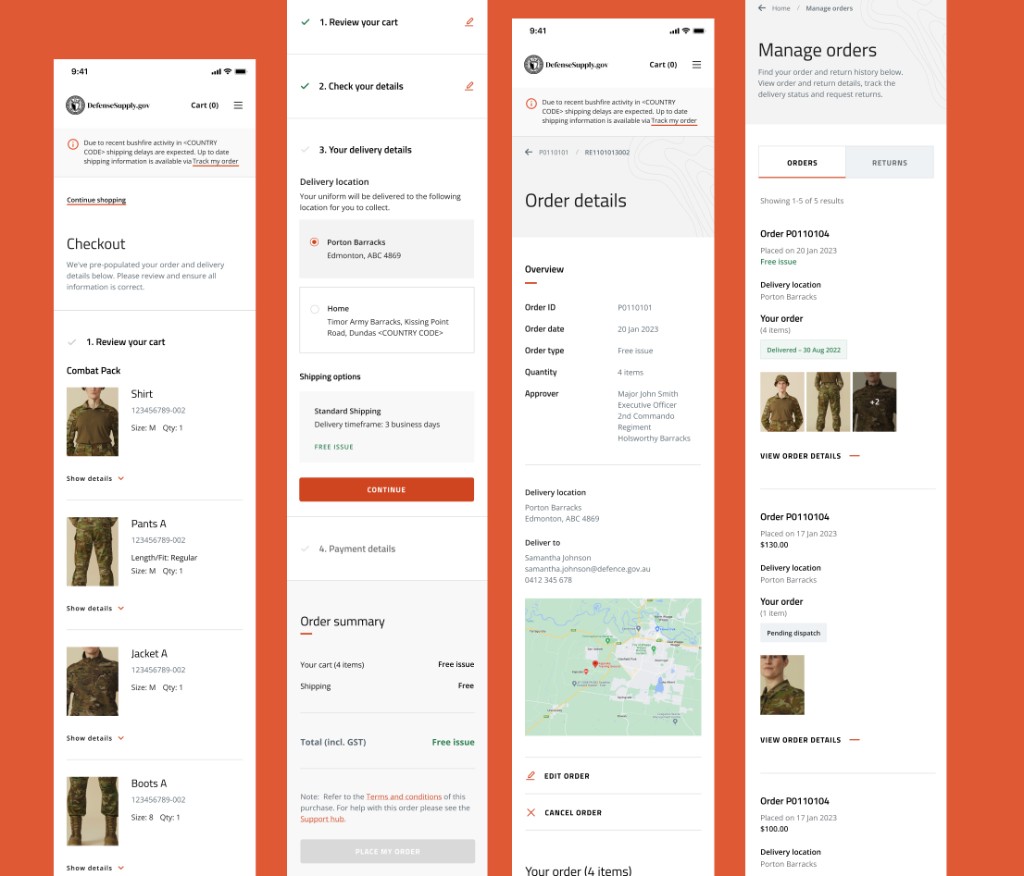
With the Garrison Design System as my foundation, I focused the remaining weeks on high-fidelity prototypes for the critical user journeys.
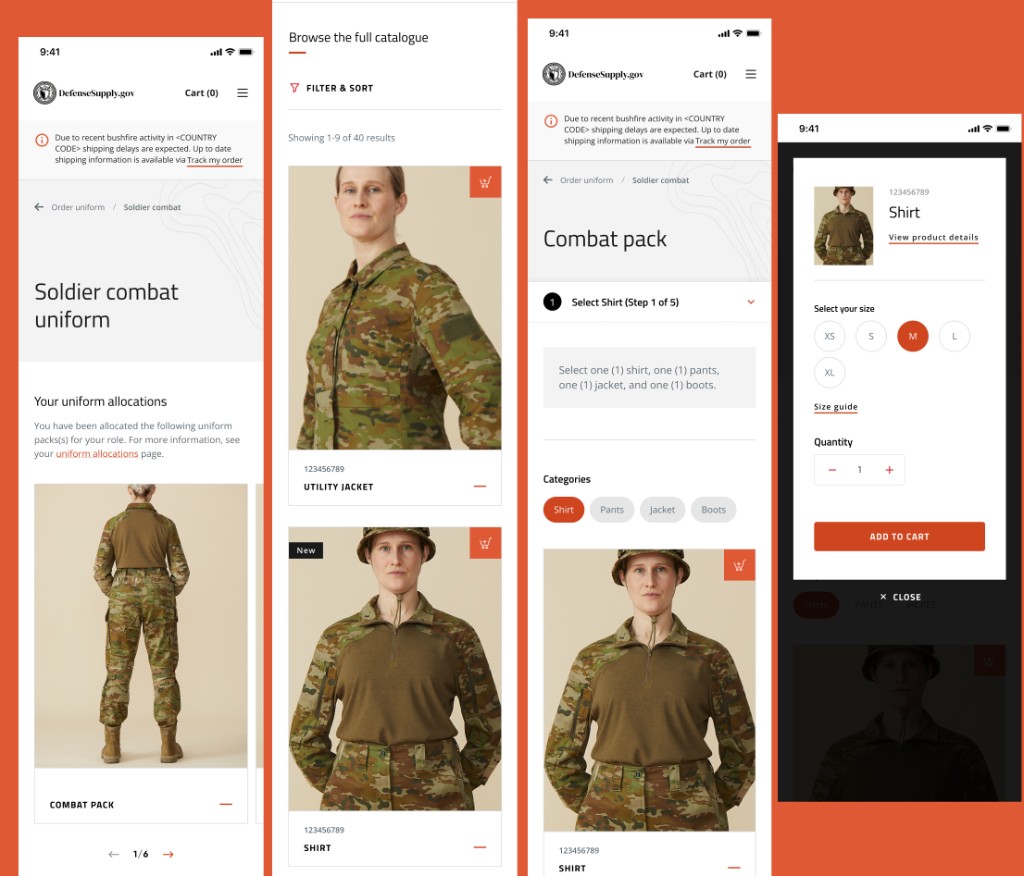
Field-ready, mobile-first flow
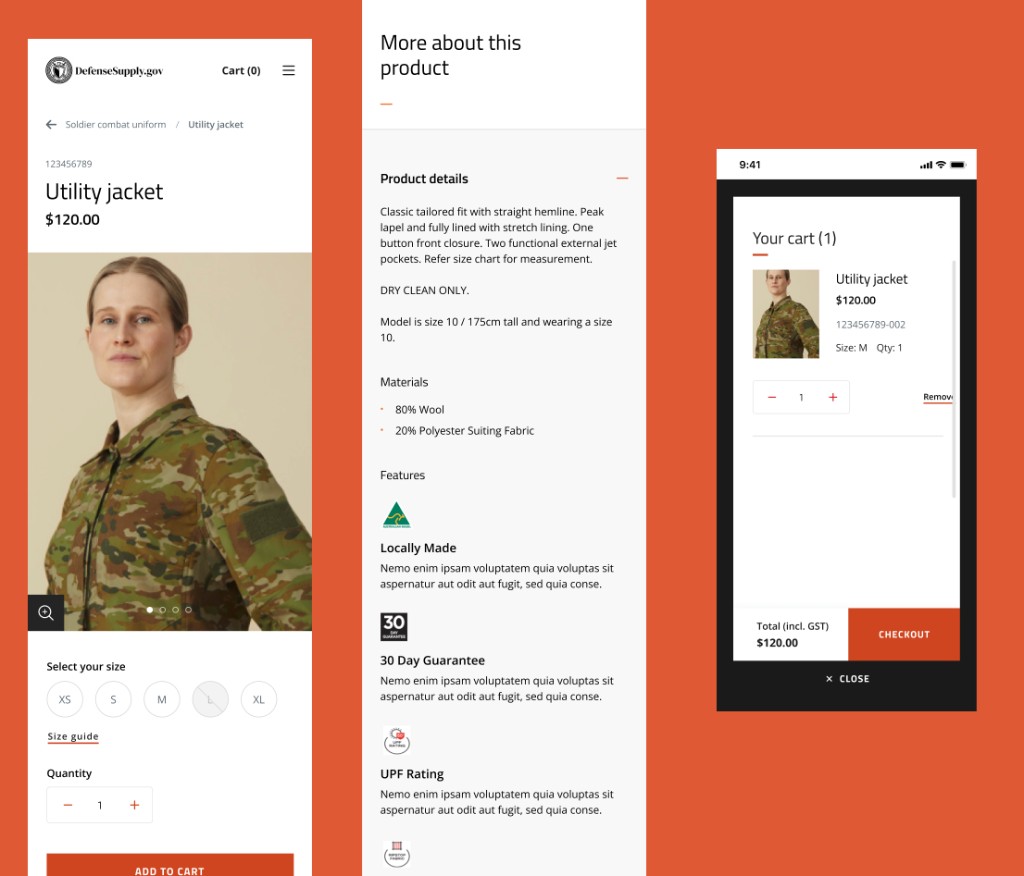
A streamlined mobile flow for personnel to request replacement items while on active duty or at a base.
- The Entitlement Logic: I designed a clear visual distinction between Allocated items and Self-Funded items.
- Payment Integration: Integrated secure government payment gateways alongside personal payment options as secondary payment method.
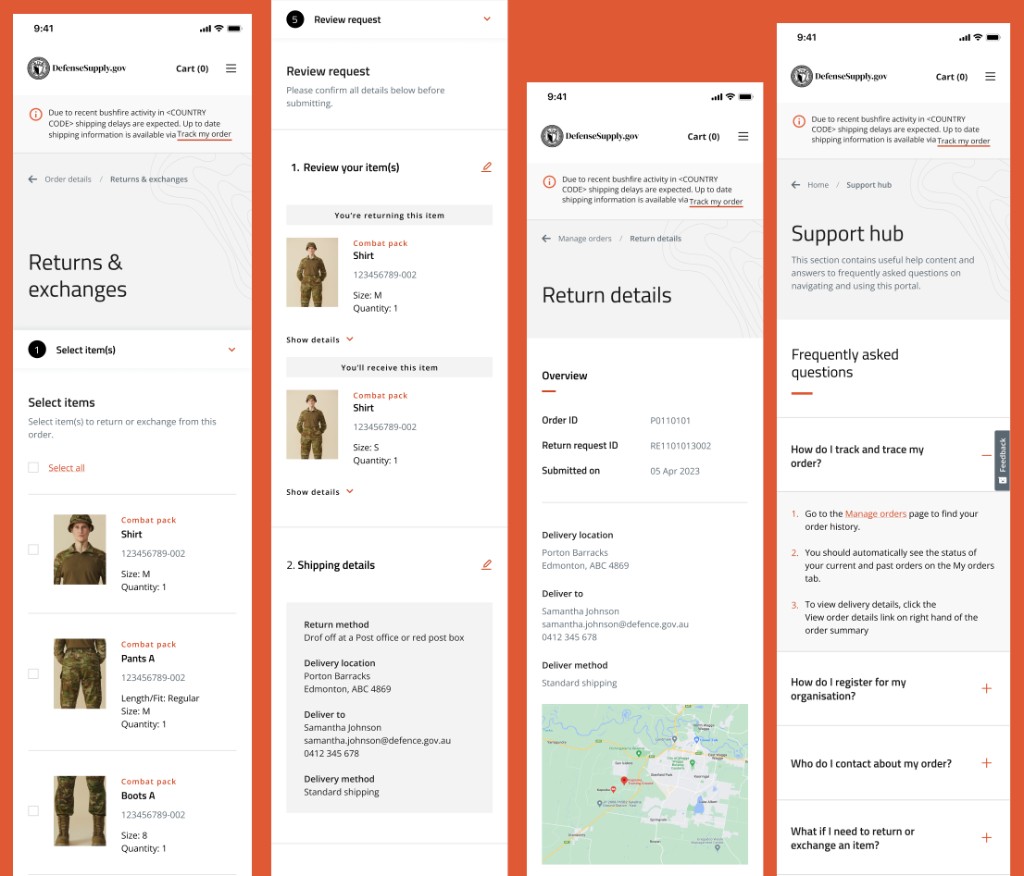
Order Lifecycle and Transparency
To reduce administrative inquiries, I designed a robust status-tracking component that works across both platforms.
- Status Tracking: Shows the order status from command approval to Ready for Base Pickup.
- Returns and Support: A returns and support hub with detailed return policies and FAQs.
Conclusion
As Senior Product Designer, my goal was to leave behind a self-sustaining and scalable design system, not a static set of polished screens. The outcome was a practical library that helped engineering move faster with consistency and lower long-term maintenance cost.